Dizi (Abgoosht): The Traditional Persian Dish and a Unique Iranian Food Experience
Discover the Story Behind Iran’s Most Traditional Comfort Food
Dizi (Abgoosht) is one of the oldest and most beloved traditional dishes of Iran. Unlike many Iranian foods that are strongly associated with a specific city or region, Dizi is considered a national Iranian dish and is prepared and enjoyed throughout the country, from major cities to rural areas. This authentic Persian dish is a perfect example of traditional Iranian cooking, where simple ingredients are transformed through patience and a slow cooking process into a meaningful culinary experience. Dizi is usually made with lamb, chickpeas, white beans, potatoes, tomatoes, onions, and dried lime, and it is slowly cooked in special traditional clay, stone, or metal pots. The long cooking process creates a dish with a rich flavour, deep aroma, and a very tender texture. For many international travellers, eating Dizi is not only about tasting a traditional dish; it is an opportunity to experience one of the most fascinating food traditions of Iran and understand the way Iranians have enjoyed food for generations.
The History of Dizi in Iranian Food Culture
Dizi has a deep connection with the traditional lifestyle of Iranians, especially rural communities, farmers, and nomadic groups. In the past, Abgoosht was an ideal meal for families and workers because it was prepared with accessible ingredients, provided high nutritional value, and could feed several people at the same time. The slow cooking method, combined with meat, legumes, and vegetables, allowed all ingredients to blend together and create a hearty meal suitable for working days and colder seasons. Over time, Dizi developed beyond an everyday meal and became one of the symbols of Iranian culinary heritage. Today, it is served in traditional restaurants throughout Iran and is considered one of the must-try foods for travellers interested in Persian cuisine.
Why Is It Called Dizi?
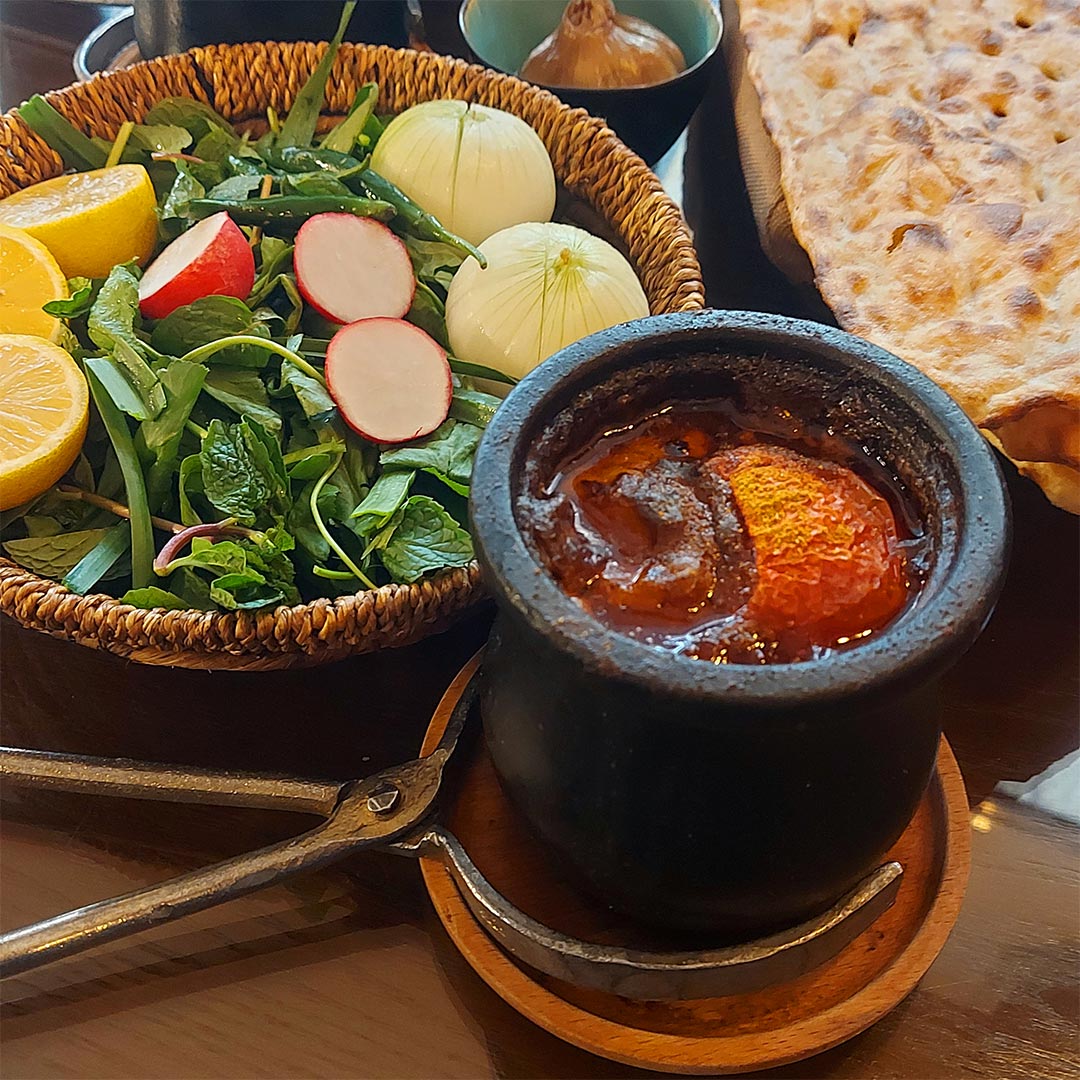
The name “Dizi” comes from the traditional pot used to prepare and serve this dish. Traditionally, Abgoosht is cooked in small clay, stone, or metal pots called Dizi. These pots are usually designed for a single serving, with a round or cylindrical shape and a relatively narrow opening that helps maintain heat and allows the ingredients to cook slowly. This traditional cooking method allows the meat, legumes, and spices to release their flavours gradually, creating the distinctive taste of Dizi. The image of a traditional Dizi pot on the table, together with fresh bread, herbs, pickles, onions, and the special wooden or metal masher, is itself an important part of the Iranian dining experience and one of the elements that makes this food especially attractive for international visitors.
How Is Dizi Prepared?
The main ingredients of Dizi include lamb meat, usually with bone, chickpeas, white beans, potatoes, tomatoes, onions, dried lime, and traditional spices such as turmeric and pepper. All ingredients are placed together in the Dizi pot and slowly cooked for several hours over low heat until the meat becomes tender and the flavours are fully combined. After cooking, the rich broth is separated from the solid ingredients and served in a separate bowl. The remaining ingredients, including meat, chickpeas, beans, and potatoes, are prepared for the second stage of eating, creating a unique two-part dining experience that is rarely found in modern cuisine.
The Unique Tradition of Eating Dizi
One of the most fascinating aspects of Dizi is the traditional way it is served and eaten. Unlike many dishes that are simply served on a plate, Dizi is a complete culinary ritual with several steps. First, the rich broth is poured into a separate bowl, and pieces of bread are added to absorb the flavours. This traditional practice, known as Tilit, is an important part of Iranian food culture and is also used in other traditional meals. After that, the remaining ingredients are mashed together using a traditional food masher called a goosht-koob, creating a smooth mixture that is enjoyed with fresh bread, herbs, onions, pickles, and sometimes Doogh. For many international travellers, this process is one of the most memorable parts of the experience because they are not simply eating a meal; they are participating in an authentic Iranian food tradition. This unique serving style is one of the reasons why Dizi has become especially popular among culinary travellers.
What Does Dizi Taste Like?
Dizi is a warm, hearty, and highly nutritious dish. Its main flavours come from the combination of lamb, legumes, traditional spices, and dried lime. The long cooking process makes the meat extremely tender and allows all ingredients to develop a rich and balanced taste. For international visitors, Dizi may feel different from many modern dishes because it is not only about the final flavour; it is also about the traditional way of preparation, serving, and sharing the meal. Many travellers consider Dizi one of the most memorable culinary experiences of their journey in Iran because it connects food with history, tradition, and everyday life.
Dizi and Iranian Hospitality
Dizi represents more than just a traditional dish; it is part of Iranian hospitality and social culture. In the past, eating Abgoosht with family members, friends, or colleagues was an opportunity for conversation and social connection. Many traditional Dizi restaurants in Iran still preserve this atmosphere, where the goal is not only eating but also experiencing an authentic Iranian environment. Dizi reflects an important philosophy of Persian cooking: transforming simple ingredients into a meaningful, flavourful, and memorable experience.
Dizi as a Must-Try Food Experience in Iran
Although every region of Iran has its own local specialties, Dizi is one of the dishes that represents the wider food culture of the country. Alongside famous foods such as Isfahan Beryan, Khoresh-e Mast, and Doogh and Gooshfil, trying Dizi helps travellers discover the diversity and richness of Iranian cuisine. Whether you visit Tehran, Isfahan, Shiraz, or other cities across Iran, experiencing Dizi in a traditional restaurant is highly recommended for anyone interested in authentic Persian culture and local food traditions.
Dizi and Culinary Tourism in Iran with JeyTravel
Today, culinary tourism is one of the most important parts of modern travel experiences. Many travellers are interested not only in historical monuments and natural landscapes but also in discovering local foods, traditions, and everyday lifestyles. Dizi is one of the best examples of Iranian culinary heritage because it tells a story about history, agriculture, traditional lifestyles, and social customs. Through JeyTravel’s culinary tours, Iranian cooking classes, and food experiences, travellers can discover authentic Persian cuisine with local experts, visit traditional restaurants, learn about Iranian ingredients and cooking methods, and taste dishes such as Dizi, Beryan, Khoresh-e Mast, and other regional specialties. For travellers who want to experience Iran beyond monuments and landscapes, exploring Persian cuisine through food experiences provides a deeper connection with Iranian culture and local communities.
Related Articles
For a deeper exploration of Iranian food culture, we recommend reading our related articles: Isfahan Beryan: The Most Famous Traditional Food of Isfahan, Iran, Iranian Doogh: The Traditional Yogurt Drink of Iran, Doogh and Gooshfil in Isfahan: A Unique Traditional Food Experience, and Khoresh-e Mast: Isfahan’s Traditional Persian Dessert and Culinary Heritage.