Alamut Castle and Cultural Landscape
Description:
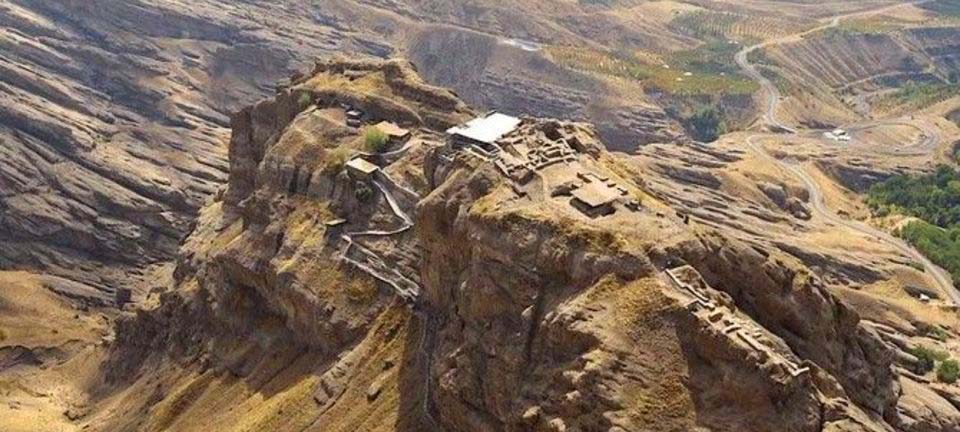
The Alamut Castle and Cultural Landscape is one of the most important and fascinating historical sites in Iran and one of the world’s best-known mountain fortresses. Situated within the dramatic valleys and highlands of the Alborz Mountains, Alamut is internationally famous for its association with Hassan-i Sabbah and the Nizari Ismaili State, which established its center of power in this region during the 11th and 12th centuries.
Built on top of a steep rocky outcrop, Alamut Castle occupied a remarkably strategic position. Its difficult access, commanding views over the surrounding valleys, and sophisticated defensive design made it one of the most secure fortresses of its time. For nearly two centuries, the castle served as the political, intellectual, and administrative center of the Nizari Ismailis and played a significant role in the history of medieval Iran and the wider Islamic world.
The name Alamut appears in numerous historical sources from both East and West. In European literature and historical accounts, the site became associated with the legendary stories of the Assassins, making it one of the most famous medieval sites in the Middle East. Although many of these stories became intertwined with myths and legends over the centuries, there is no doubt that Alamut was one of the most influential political and intellectual centers of its era.
The UNESCO inscription extends far beyond the fortress itself and includes the wider Cultural Landscape of Alamut. This landscape encompasses historic villages, ancient communication routes, agricultural terraces, traditional water-management systems, defensive structures, and a remarkable mountain environment shaped by centuries of human activity. Together, these elements illustrate the long-term relationship between local communities and the challenging geography of the Alborz Mountains.
One of the most significant aspects of the Alamut region is the way its inhabitants adapted to the mountainous environment. Over many generations, local communities developed sustainable agricultural systems, transformed steep slopes into productive terraces, managed water resources with great skill, and established permanent settlements in an otherwise demanding landscape. This interaction between people and nature is one of the key reasons for the site’s Outstanding Universal Value.
Beyond its historical importance, Alamut is also one of Iran’s most spectacular natural destinations. Deep valleys, dramatic cliffs, alpine scenery, traditional villages, fruit orchards, and panoramic mountain views create a landscape unlike almost anywhere else in the country. During spring and summer, the region becomes exceptionally green and vibrant, while autumn transforms the valleys into a colorful mosaic of red, orange, and gold.
Among the region’s most famous natural attractions is Lake Ovan, a beautiful mountain lake located near the castle. Combined with the historic villages, hiking routes, and cultural heritage sites of the area, Lake Ovan contributes to the unique character of the Alamut landscape and attracts visitors from around the world.
Today, Alamut appeals not only to historians and archaeologists but also to nature lovers, photographers, hikers, and travelers seeking a deeper understanding of Iran’s cultural heritage. Its inscription on the UNESCO World Heritage List has further strengthened its international recognition and confirmed its position as one of Iran’s most remarkable cultural landscapes.
Why Visit Alamut?
- UNESCO World Heritage Site
- Home of Hassan-i Sabbah and the Nizari Ismailis
- One of the world’s most famous mountain fortresses
- Internationally known through the history of the Assassins
- Spectacular landscapes of the Alborz Mountains
- Lake Ovan and historic mountain villages
- A unique combination of history, culture, architecture, and nature
- Excellent opportunities for photography, hiking, and cultural exploration