Safavid Iran: The Empire, Shah Abbas, and the Glory of Isfahan
Discover the Story of the Safavid Dynasty and the Legacy That Still Shapes Iran Today
Introduction
The Safavid period (1501–1736) is one of the most important eras in Iranian history, a time that transformed Iran’s political structure, religious identity, architecture, art, and international position. After centuries of fragmented rule, the Safavids created a powerful centralized state that united much of Iran under one government and established one of the most influential Persian empires of the early modern world.
The dynasty was founded by Shah Ismail I in 1501, who chose Tabriz as the first capital of Safavid Iran and officially established Twelver Shia Islam as the state religion. This decision shaped Iran’s identity for centuries and created a distinct political and cultural position in a region where the Ottoman Empire represented the dominant Sunni power.
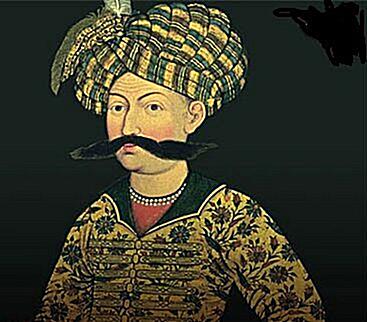
Among the ten Safavid kings who ruled Iran during the dynasty’s approximately 235-year history, Shah Abbas I (r. 1587–1629) became the most influential and is widely considered the greatest Safavid ruler. His reign marked the golden age of Iran, when Isfahan was transformed into one of the most magnificent cities in the world.
The Formation of Safavid Iran and the Rise of Shia Identity
When Shah Ismail I established the Safavid dynasty in 1501, he created more than a new political system; he shaped a new identity for Iran. By declaring Twelver Shia Islam as the official religion, the Safavids created a unique religious and political structure that distinguished Iran from neighboring powers.
The relationship between Safavid Iran and the Ottoman Empire was one of the defining rivalries of the period. Their conflicts were not only about territory and political influence but also involved religious and cultural competition between two major regional powers.
For travelers today, understanding this historical background helps explain why many Iranian cities, especially Isfahan, contain such a strong connection between religion, architecture, and political power.
Safavid Iran: A Global Power in the Age of Empires
During the Safavid period, Iran was an active participant in global politics and international trade. This era coincided with major transformations in Europe and the wider world. Portugal and Spain had become powerful maritime nations after the Age of Exploration, the Dutch established the Dutch East India Company (VOC) in 1602 and expanded their global trade network, while France was rising as a major European power under rulers such as Louis XIV.
At the same time, Safavid Iran occupied a strategic position between East and West. The country became an important center of silk production, international commerce, diplomacy, and cultural exchange. European travelers, merchants, and ambassadors visited Iran and recorded their impressions of its cities, especially Isfahan.
Iran during this period was not an isolated kingdom; it was part of a connected world where political negotiations, trade routes, and cultural interactions linked Asia and Europe.
Shah Abbas I: The King Who Made Isfahan Famous
Shah Abbas I was the fifth ruler of the Safavid dynasty and governed Iran from 1587 to 1629. When he came to power, the Safavid state faced internal challenges and external threats. Through military, economic, and administrative reforms, he strengthened the government and transformed Iran into one of the strongest powers in the region.
His achievements included creating a more organized army, reducing the political influence of the Qizilbash tribal forces, developing international trade, supporting artists and craftsmen, expanding diplomatic relations with Europe, and moving the capital to Isfahan.
However, Shah Abbas’s greatest legacy remains the transformation of Isfahan into a world-class imperial capital, a city designed to represent the power, culture, and ambition of Safavid Iran.
The Transfer of the Capital to Isfahan and the Birth of a World City
In 1598, Shah Abbas transferred the capital from Qazvin to Isfahan, a decision that changed the history of the city forever. Isfahan was selected because of its central location, economic potential, access to trade routes, and ability to support large-scale urban development.
Shah Abbas wanted to create a capital that reflected the greatness of Iran. New royal complexes, mosques, gardens, bridges, and commercial centers were built, transforming Isfahan into one of the largest and most impressive cities of its time.
European travelers who visited Safavid Isfahan described it as one of the greatest cities in the world and compared its beauty and importance with major European capitals. This was the period when the famous expression “Isfahan, Half of the World” became associated with the city.
To understand the heart of this imperial vision, travelers can explore the story of the city’s most famous monument and UNESCO heritage site in 🔗 [Naqsh-e Jahan Square: The Heart of the Safavid Empire].
The Safavid Legacy in Isfahan: A Living Historical City
The greatest visible legacy of the Safavid era can still be experienced throughout Isfahan today. The city preserves the architecture, urban planning, and artistic achievements of a period when Iran reached extraordinary cultural heights.
The most important Safavid landmarks include Naqsh-e Jahan Square, Imam Mosque, Sheikh Lotfollah Mosque, Ali Qapu Palace, Qeysariyeh Bazaar, Chehel Sotoun Palace, Si-o-se-pol Bridge, Khaju Bridge, and the Persian gardens created during this period.
These monuments are not simply historical buildings. They represent the combination of politics, religion, trade, art, and daily life in the capital of a powerful empire.
Safavid Art: The Golden Age of Persian Architecture and Crafts
The Safavid period is considered one of the greatest eras of Persian art. Architecture reached a new level of elegance through carefully planned urban spaces, monumental buildings, magnificent domes, and the harmonious relationship between architecture and nature.
Safavid tilework became one of the most recognizable expressions of Persian art. The use of seven-color tiles and mosaic tile decoration transformed buildings such as Imam Mosque and Sheikh Lotfollah Mosque into masterpieces of Islamic architecture.
Calligraphy also flourished during this period, and the inscriptions decorating Safavid monuments remain outstanding examples of Persian artistic skill. At the same time, carpet weaving, miniature painting, metalwork, enamelwork, and other traditional crafts reached remarkable levels of quality.
Much of the image that the world recognizes today as Persian art has deep roots in the Safavid era.
The Safavid Conflict with Portugal and the Recovery of Hormuz
The Safavid period was also an era of global competition. In the early sixteenth century, Portuguese forces expanded their influence in the Persian Gulf and captured Hormuz Island in 1507, establishing a strategic base for controlling maritime trade routes.
More than a century later, during the reign of Shah Abbas I, Iran challenged Portuguese dominance in the Gulf. With the support of English naval forces, Safavid troops successfully defeated the Portuguese and recaptured Hormuz in 1622.
This event was one of the most significant moments in the history of the Persian Gulf and demonstrated that Safavid Iran was an active player in international politics and global competition.
Chehel Sotoun: Reading Safavid History Through Art
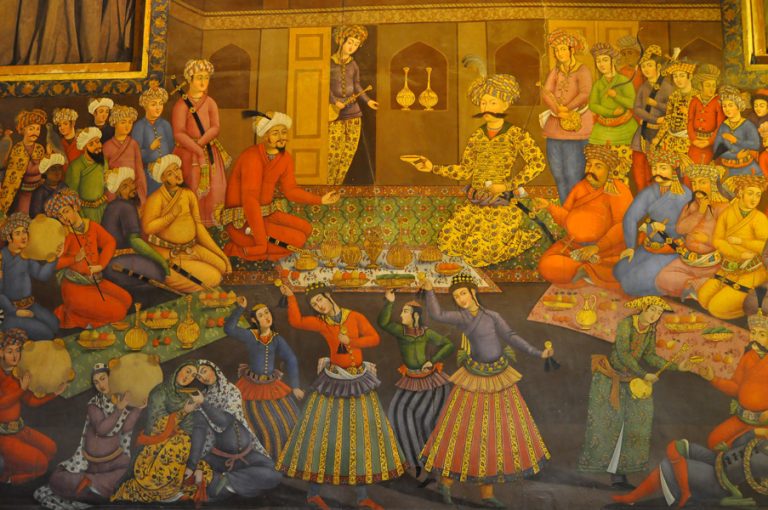
Among the most fascinating places to understand Safavid history is Chehel Sotoun Palace in Isfahan. While walking through this palace, travelers have the opportunity to see a visual history of the Safavid era through its magnificent wall paintings.
These large paintings portray royal ceremonies, diplomatic meetings, battles, and important historical events, transforming the palace into a unique illustrated record of Persian history. Experienced JeyTravel guides help travelers understand the stories behind these paintings, explaining the political events, personalities, and international relationships represented in the artworks.
One of the famous paintings in Chehel Sotoun is related to Nader Shah, whose rise marked the period after the Safavid dynasty. Travelers interested in this powerful ruler and his role in Iranian history can explore more in the future article 🔗 [Nader Shah Afshar: The King Who Changed Iran’s History].
Chehel Sotoun is also connected with the tradition of Persian Garden design, where water, architecture, vegetation, and symbolic concepts were combined to create harmonious landscapes. Visitors who want to understand this important element of Iranian heritage can discover more in 🔗 [Persian Garden: The UNESCO Heritage of Iran].
The Fall of the Safavid Dynasty and Its Lasting Influence
After the golden age of Shah Abbas, the Safavid state gradually weakened due to ineffective rulers, economic difficulties, and military problems. In 1722, Isfahan was besieged and captured by Afghan forces, marking the beginning of the end of Safavid power.
Although the dynasty officially ended in 1736, its influence continued to shape Iran’s religious identity, architecture, urban design, arts, and cultural traditions.
The Safavid legacy remains visible not only in historical monuments but also in the cultural landscape of modern Iran.
Why Understanding the Safavid Era Matters for Travelers
For visitors exploring Iran, understanding the Safavid period provides a deeper meaning behind many of the country’s most important attractions.
Without historical knowledge, Naqsh-e Jahan Square may appear simply as a beautiful collection of monuments. With an understanding of Safavid history, it becomes the center of an imperial project where religion, commerce, politics, and art were carefully connected.
In the same way, Imam Mosque represents more than architectural beauty, and Ali Qapu Palace represents more than a royal residence; each monument tells a story about a powerful period when Iran played an important role in the world.
Experiencing Safavid Iran with JeyTravel
Many travelers visit Isfahan and admire its monuments, but the difference between simply seeing and truly understanding a place often comes from interpretation and storytelling.
Through JeyTravel cultural journeys, experienced guides introduce travelers to the deeper stories behind Safavid heritage. While visiting Chehel Sotoun, they explain the historical meaning behind the paintings and help visitors understand the events represented on the walls. At Naqsh-e Jahan Square, they reveal how this magnificent space functioned as the political, religious, and commercial heart of the Safavid Empire.
Through expert interpretation, travelers discover that Safavid heritage is not only about beautiful architecture; it is about understanding the ideas, people, and historical events that created these masterpieces.
Exploring Safavid Isfahan with JeyTravel allows visitors to experience Iran as a living civilization, where history, art, architecture, and local culture continue to exist together.
Related Articles
🔗 [Naqsh-e Jahan Square: The Heart of the Safavid Empire]
🔗 [Persian Garden: The UNESCO Heritage of Iran]
🔗 [Chehel Sotoun Palace: The Illustrated History of Safavid Iran]